
Keeping enough blood and blood products on hand to meet patient needs makes a certain level of discards inevitable and appropriate. We define wastage as 'the proportion of discards that are neither inevitable nor appropriate'. This can be a result of holding too much inventory.
Together with good inventory management, reducing blood product wastage is a key component of blood product management.
Effectively managing blood and blood products is a responsibility for all Australian Health Providers (AHPs), as described in both the:
Reporting blood discard data
A range of reports are available for AHPs in BloodNet. These reports allow you to monitor your:
- orders
- issues and receipts
- transfers
- discards and wastage.
These reports include both:
- fresh blood and blood products
- commercial products issued by Australian Red Cross Lifeblood.
The BloodNet reports tell you your AHP's discards:
- as a percentage of your issues (DAPI)
- compared to similar sites in your state and nationally
- compared to benchmark targets.
Blood product wastage benchmarks
BloodNet reports include the target rates we have established for:
- red blood cells
- platelets
- clinical fresh frozen plasma
- and cryoprecipitate.
We review discards for commercial blood products to determine whether benchmarks should be set.
You can use the targets from BloodNet reports as benchmarks for your blood wastage.
Promotional campaign
We have developed a targeted range of wastage-reduction promotional material for clinical staff, including:
- laboratory staff
- transfusion nurses
- clinical champions.
We have designed these materials to move discussions of blood product management from laboratories to clinical areas, such as wards or operating theatres.
To order materials, email support@blood.gov.au
National discard data
The public release of high-level summary discard data increases transparency and accountability.
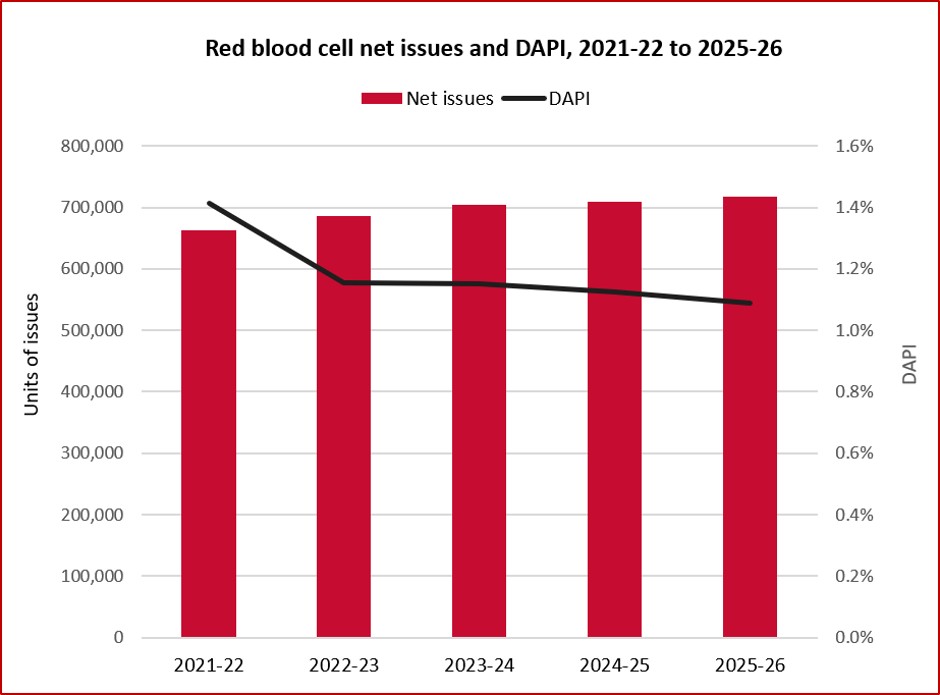
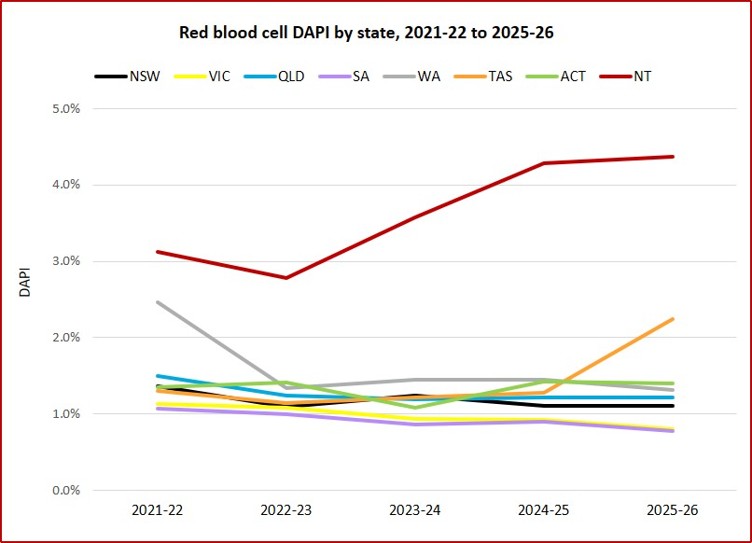
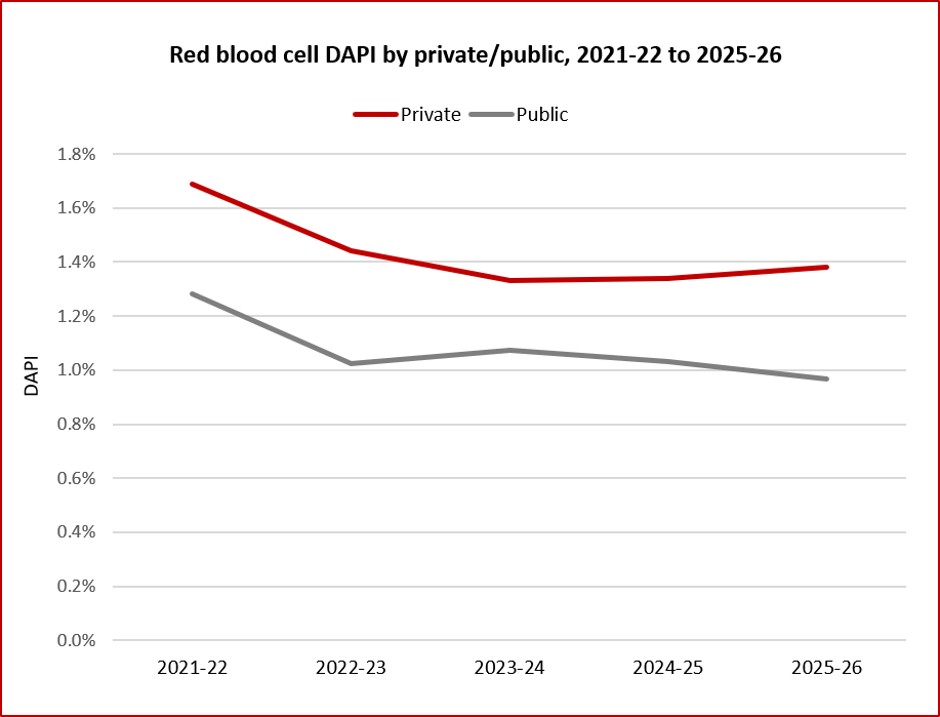
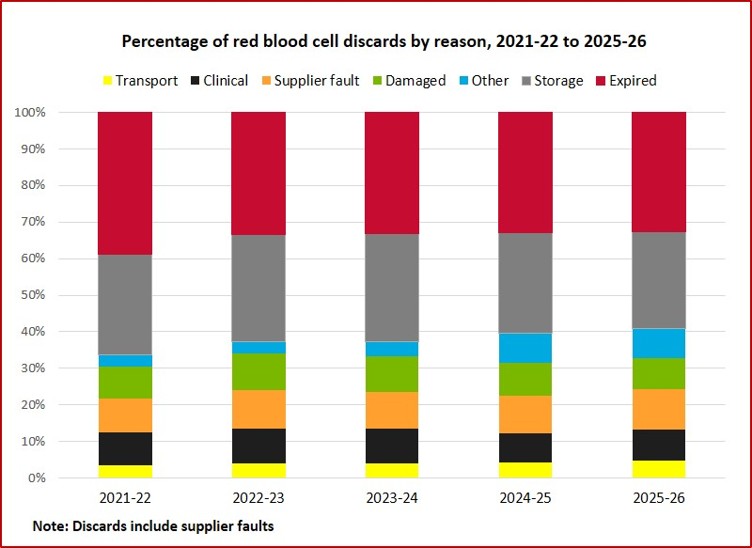
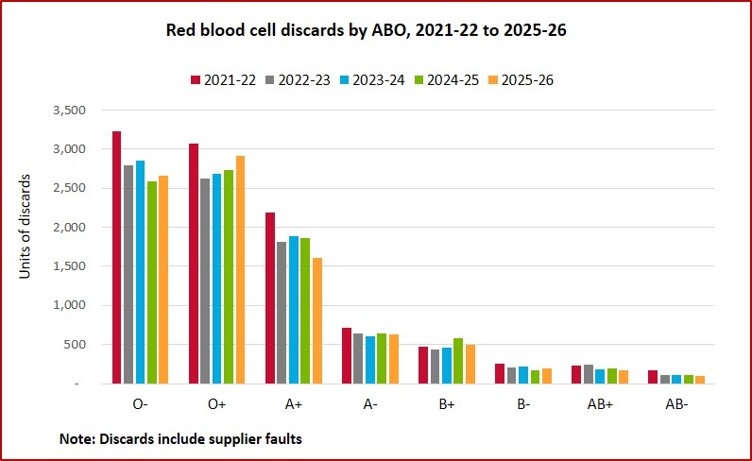
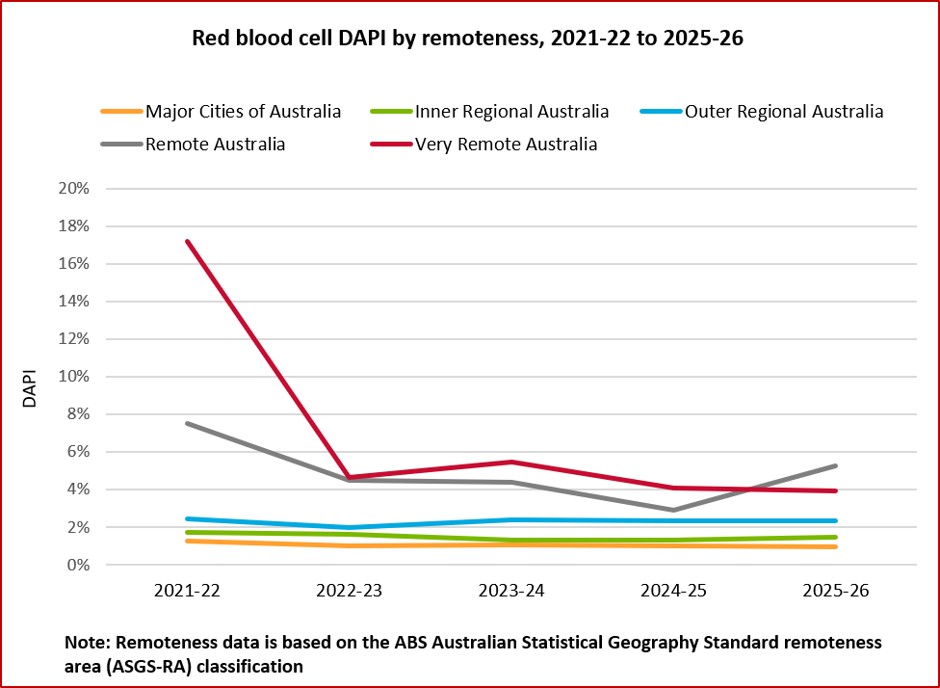
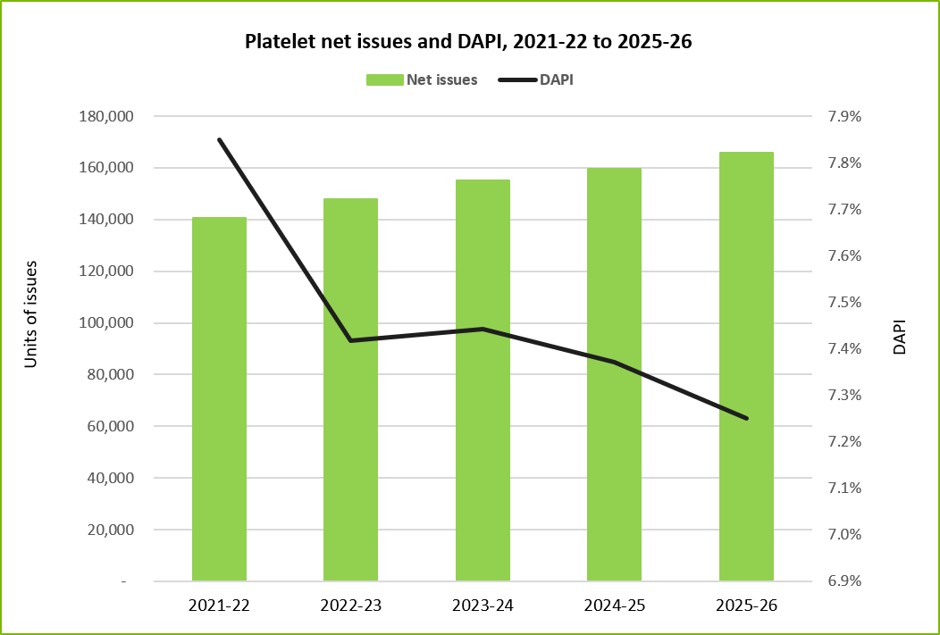
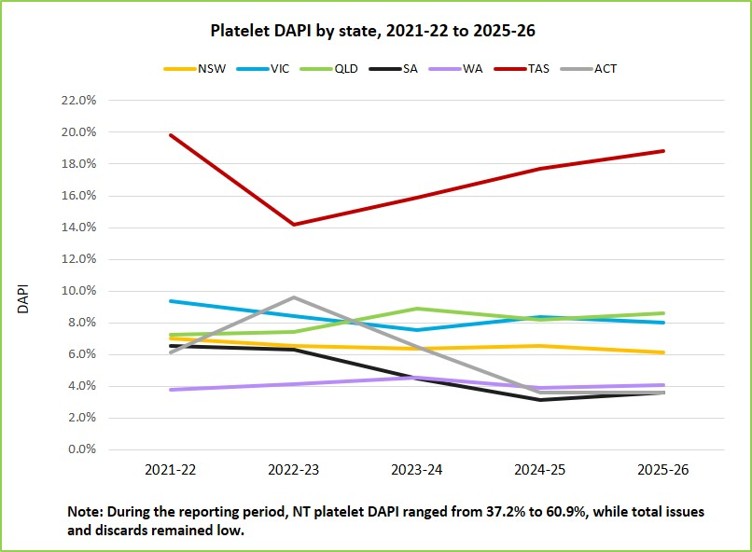
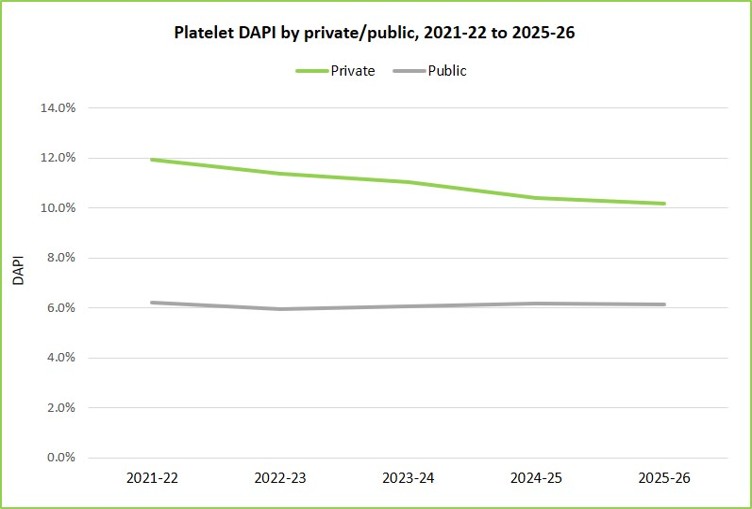
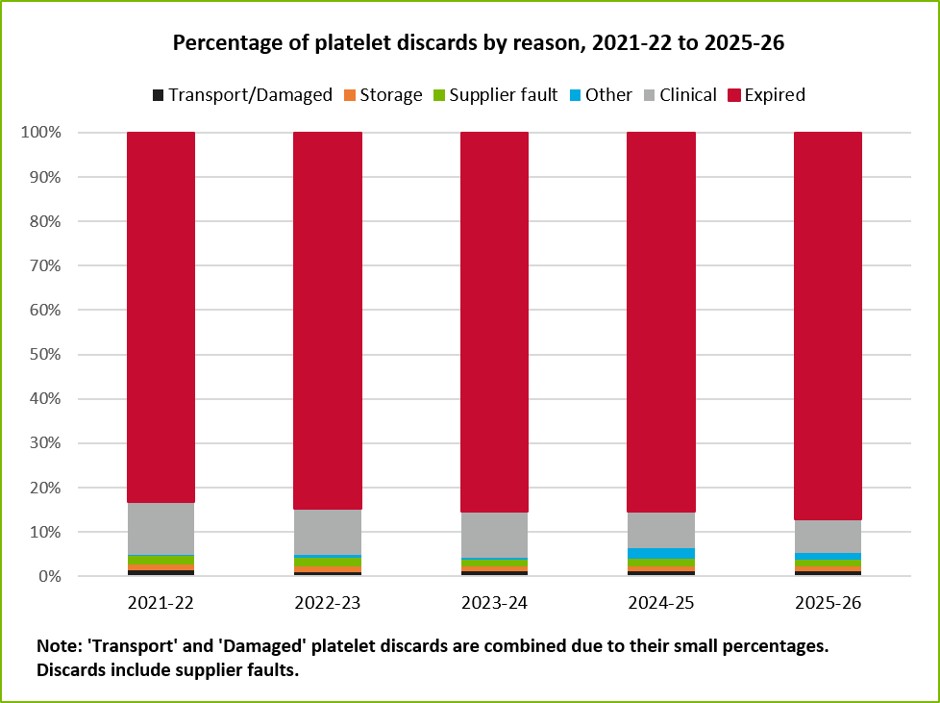
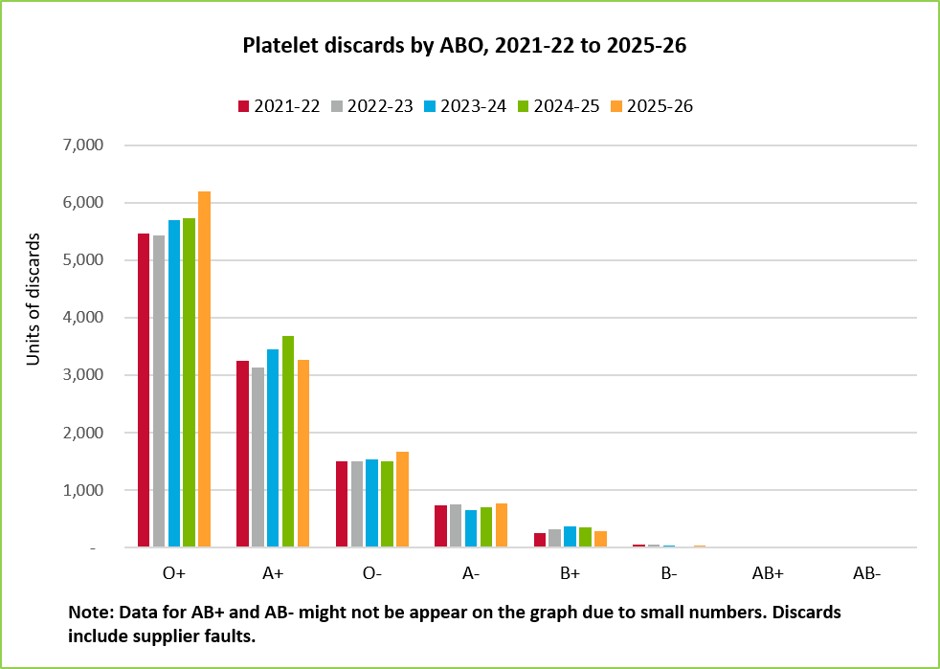
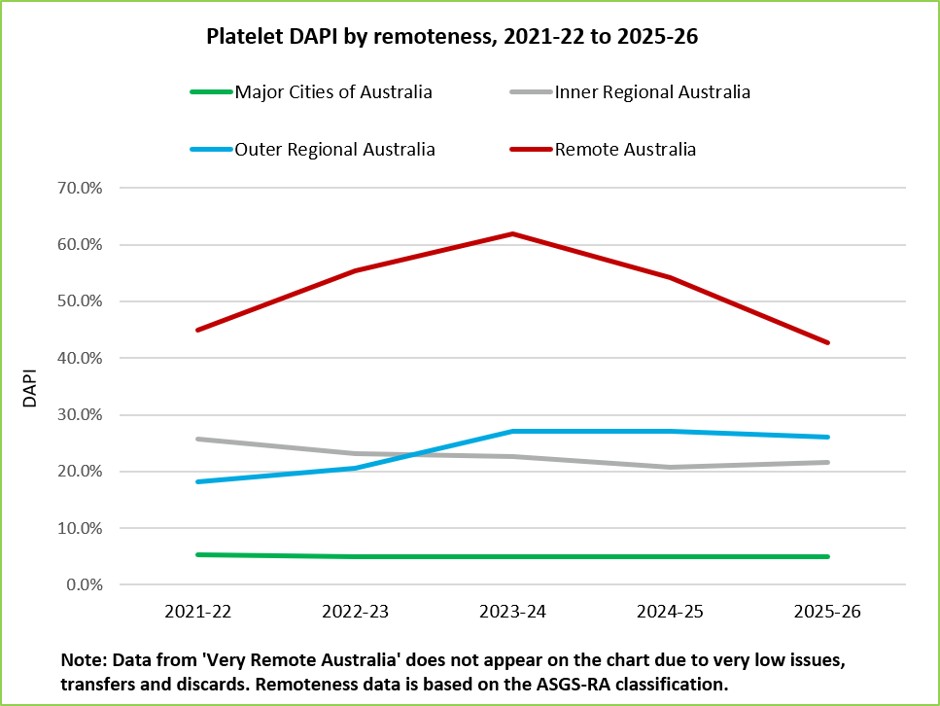
These graphs provide a snapshot of national red blood cell and platelet discards in Australia over time.
Despite ongoing waste reduction efforts, in 2025-26, we recorded 7,825 red blood cell (RBC) discards and 12,033 platelet discards, costing approximately $3.3 million and $4.6 million respectively.
The graphs show the rate of Discards as a Percentage of Issues (DAPI). Supplier faults are excluded unless otherwise stated. In 2025-26, the national RBC DAPI was 1.1% and the national platelet DAPI was 7.3%. DAPI rates were higher in the private sector than the public sector and increased with geographic remoteness for both products.
Red blood cell discard rates
Platelet discard rates
Get in touch
If you have a query about reducing blood product wastage, please contact us.
Last updated: 02 Sep 2026